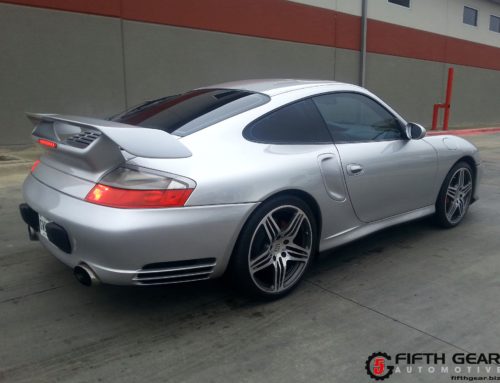
Porsche engineering demands precise hydraulic engagement throughout the drivetrain, and nowhere is this more evident than in the clutch actuation system. The clutch slave cylinder is a small but critical hydraulic component responsible for disengaging the clutch when you press the pedal. When it begins to fail on a Porsche — whether a 911, Cayman, Boxster, or Macan manual — the symptoms can range from a subtle spongy pedal feel to a complete loss of clutch function that leaves you unable to shift gears. At Fifth Gear Automotive in Lewisville, our technicians regularly service Porsche clutch hydraulic systems and help drivers recognize the warning signs before a minor leak becomes a roadside emergency.
How the Clutch Slave Cylinder Works
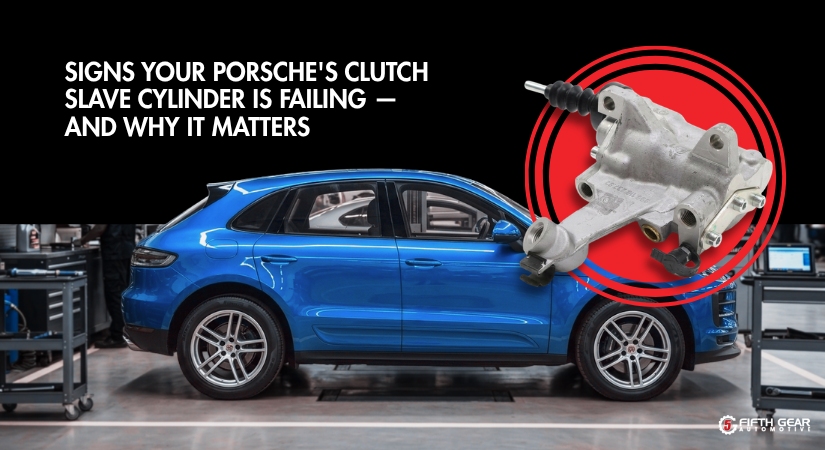
In Porsche’s hydraulic clutch system, pressing the pedal generates pressure in the master cylinder, which transmits force through the hydraulic line to the slave cylinder. The slave cylinder uses that hydraulic pressure to push the release bearing against the pressure plate, disengaging the clutch disc from the flywheel. This allows gear changes without grinding.
Many modern Porsches use a concentric slave cylinder (CSC), which sits inside the bell housing and wraps around the transmission input shaft. This design is more compact and responsive than external slave cylinder setups, but it also means the component is significantly more labor-intensive to access for inspection or replacement — the transmission must be removed to reach it. This is one reason early diagnosis is so valuable: catching a CSC failure before it progresses to a full fluid loss prevents what would otherwise be an expensive emergency repair.
Warning Signs of a Failing Slave Cylinder
The first sign most Porsche drivers notice is a change in pedal feel. A properly functioning hydraulic clutch has a firm, consistent engagement point. When the slave cylinder begins to develop internal seal wear or an external leak, the pedal may feel soft, spongy, or require more travel than usual to fully disengage the clutch. Some drivers describe it as the pedal “going deeper” before the clutch releases.
A second symptom is difficulty shifting, particularly into first gear from a stop or when changing gears at low speed. If the clutch isn’t fully disengaging because of reduced slave cylinder pressure, the transmission synchronizers have to work against a partially engaged drivetrain — producing resistance, grinding, or a clunking feel during shifts.
Clutch fluid level drops and visible leaking near the bell housing or slave cylinder body are direct evidence of seal failure. If your brake and clutch reservoir (they often share fluid in Porsche systems) has been requiring top-offs, a failing slave cylinder is one of the primary suspects alongside the master cylinder and hydraulic line connections.
Finally, a complete hydraulic failure produces a clutch pedal that goes straight to the floor with no resistance and provides no disengagement. At this stage, the vehicle cannot be shifted into gear while running — it requires towing.

Why Porsche Slave Cylinders Fail
The concentric slave cylinder in Porsche’s modern lineup uses rubber seals that degrade over time with heat cycling and age. High-performance driving — particularly trackday use or aggressive commuting on DFW highways — accelerates thermal stress on the clutch hydraulic circuit. Fluid that hasn’t been changed on schedule absorbs moisture, lowering its boiling point and contributing to seal degradation.
On earlier 986 and 996 generation Boxsters and 911s, the CSC has a known service interval that many owners neglect because the labor cost of transmission removal discourages preventive replacement. The consequence of waiting is that a seal failure during operation creates a rapid fluid loss that can contaminate the clutch disc and pressure plate, turning a hydraulic repair into a complete clutch replacement.
Diagnosis and Repair at Fifth Gear Automotive
Diagnosing a clutch slave cylinder on a Porsche begins with a pedal feel assessment and clutch hydraulic fluid inspection. If the fluid is dark, has visible contamination, or the reservoir level is low without an obvious external leak, internal slave cylinder failure is suspected. We perform a pressure test of the hydraulic circuit to confirm leak point and volume loss before opening up the drivetrain.
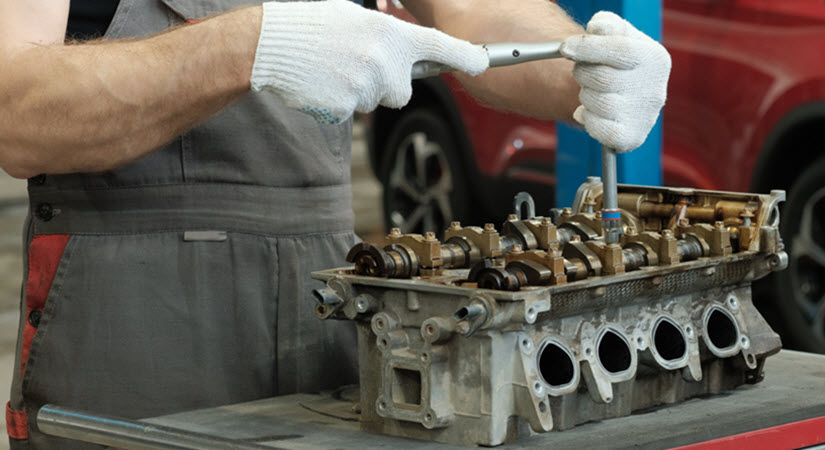
Our team handles the full scope of Porsche clutch service — from hydraulic line replacement and master cylinder service to transmission removal and CSC replacement with OEM or equivalent-spec components. After any clutch hydraulic work, the system is bled and pedal engagement point is verified before the vehicle is returned.
Contact Fifth Gear Automotive in Lewisville
If your Porsche’s clutch pedal feels different or gear changes have become difficult, contact Fifth Gear Automotive at (972) 734-3761 or visit us at 1975 Archer Way, Lewisville, TX 75077. We’ll diagnose your clutch hydraulic system and get your Porsche shifting cleanly again.
Frequently Asked Questions
Can I drive my Porsche with a failing slave cylinder?
If the pedal is still engaging, you may be able to drive short distances, but a slave cylinder in active failure can lose pressure rapidly and leave you unable to shift. We recommend having the system inspected before driving further once symptoms appear.
How long does concentric slave cylinder replacement take on a Porsche?
Because the CSC requires transmission removal, the repair typically takes six to ten hours of labor, depending on the model. It’s also the ideal time to inspect or replace the clutch disc, pressure plate, and release bearing since those components are already exposed.
Is clutch fluid the same as brake fluid in a Porsche?
Yes — most Porsche clutch hydraulic systems share a reservoir with the brake fluid circuit and use DOT 4 fluid. This means a slave cylinder leak can affect brake fluid level, though the systems are hydraulically independent circuits.
How often should clutch hydraulic fluid be changed on a Porsche?
Porsche recommends hydraulic fluid changes every two years regardless of mileage. Fluid absorbs moisture over time, reducing its boiling point and accelerating seal wear in both the slave and master cylinders.

John Miller is the Director of Business Development at Fifth Gear Automotive.
Fifth Gear Automotive Repair provides automotive service and repair. We service all makes and models – both domestic and import. We specialize in European auto repair for BMW, VW, Mercedes, Porsche, Audi, Volvo, Jaguar, Land Rover and most other popular European marques.
Fifth Gear Automotive has 10 locations – Allen, Argyle, Aubrey-Crossroads, Castle Hills, Frisco, Lewisville, McKinney, North Forth Worth, and Southlake, Texas.