By: Juan Garcia, Marketing Lead • Published: May 13, 2025 • Updated: August 17, 2026 • Read Time: 7 min
TL;DR
Most transmission fluid leaks trace to a worn pan gasket, a failed seal or a damaged cooler line. How long you can drive depends on severity: a slow drip gives you a few days to schedule service; a puddle under a parked car means stop and call a shop today.
How to Tell If It’s Transmission Fluid (and Not Another Leak)
Not every puddle on the driveway points to the same problem. Transmission fluid has specific characteristics that set it apart from engine oil, coolant or brake fluid, and knowing what you’re looking at helps you gauge urgency before you call the shop.
Color: Fresh transmission fluid is bright red to pink. As it ages and degrades from heat, it darkens toward brown. Severely burned fluid can appear nearly black and carries a sharp, acrid odor.
Texture: Transmission fluid is slippery and slightly oily, thinner than engine oil. A few drops rubbed between your fingers feel like a light lubricant.
Location: Transmission leaks typically pool toward the center of the vehicle, under the transmission housing. In front-wheel-drive cars, this sits behind the engine toward the firewall. In rear-wheel-drive and all-wheel-drive vehicles, the leak may appear further back, toward the center or rear of the undercarriage.
Smell: Fresh transmission fluid has a faint petroleum smell. Burned fluid, from overheating or running low for too long, has a sharper, acrid odor that’s noticeable after a drive.
If you see a red or reddish-brown puddle, check the transmission fluid dipstick if your vehicle has one (many newer models don’t). A low or discolored reading confirms an active leak.
What Causes a Transmission Fluid Leak?
Every transmission fluid leak has a specific source. Understanding the common causes helps clarify what a repair involves and why topping off the fluid is not a fix.
Worn pan gasket: The gasket sealing the transmission pan to the transmission body hardens and shrinks over time from repeated heat cycles. When it degrades, fluid seeps past the edge, usually as a slow, steady drip. This is one of the most common causes and one of the more affordable repairs.
Failed input or output shaft seals: These rubber seals stop fluid from escaping where the driveshaft or axle shafts connect to the transmission. They dry out with age and heat. A failure can make the leak appear to be coming from elsewhere in the drivetrain.
Damaged transmission cooler lines: Lines connecting the transmission to its external cooler can crack, corrode or loosen over time. A failing cooler line can drain fluid quickly, making it one of the more urgent causes.
Cracked or punctured transmission pan: Road debris or a hard scrape can crack the pan directly. A cracked pan cannot be slowed with a fluid top-off.
Torque converter seal failure: When this seal fails, fluid escapes into the bell housing and drips from the bottom of the engine. Owners often mistake it for an oil leak rather than a transmission issue.
“The one we see most often at our shops is transmission cooler lines. People overlook them until a line blows off leaving the transmission with no fluid – the car stops. It’s a cheap fix if you catch it early, but a dead transmission if you don’t.” – Matt Tews – Fifth Gear Automotive Repair Technician.
Symptoms of a Transmission Leak Beyond the Puddle
Some leaks are slow enough that you won’t see a puddle for days. These symptoms can signal that fluid is getting low before the driveway gives you a visible warning.
Slipping gears: If the transmission hesitates before engaging, shifts inconsistently or briefly loses power between gears, low fluid is a likely cause. Hydraulic pressure moves the clutch packs inside an automatic transmission, so low fluid means reduced pressure and inconsistent shifts.
Delayed engagement: A noticeable pause after shifting from Park into Drive or Reverse is often one of the first things drivers notice when fluid levels begin to drop.
Rough or harsh shifting: Gear changes feel abrupt or clunky, sometimes with a light thud. Smooth shifts depend on consistent fluid pressure. When that drops, the transmission feels it.
Whining noise: A whining sound that rises with vehicle speed, not engine RPM, often means the transmission is working harder than it should.
Burning smell after driving: If transmission fluid has been overheating from running low, you may smell it before you see a puddle. A burnt smell from beneath the car after a drive is worth taking seriously.
Transmission temperature warning light: If this light comes on, the fluid is running hotter than normal, usually because there isn’t enough of it to manage heat.
“Customers commonly describe transmission slippage or say the vehicle is not shifting properly. They may feel like the transmission briefly slips into neutral before catching and moving again.” Calvin Cox – Fifth Gear Automotive Repair Service Advisor
How Long Can You Drive With a Transmission Fluid Leak?
How long depends on what you’re actually dealing with.
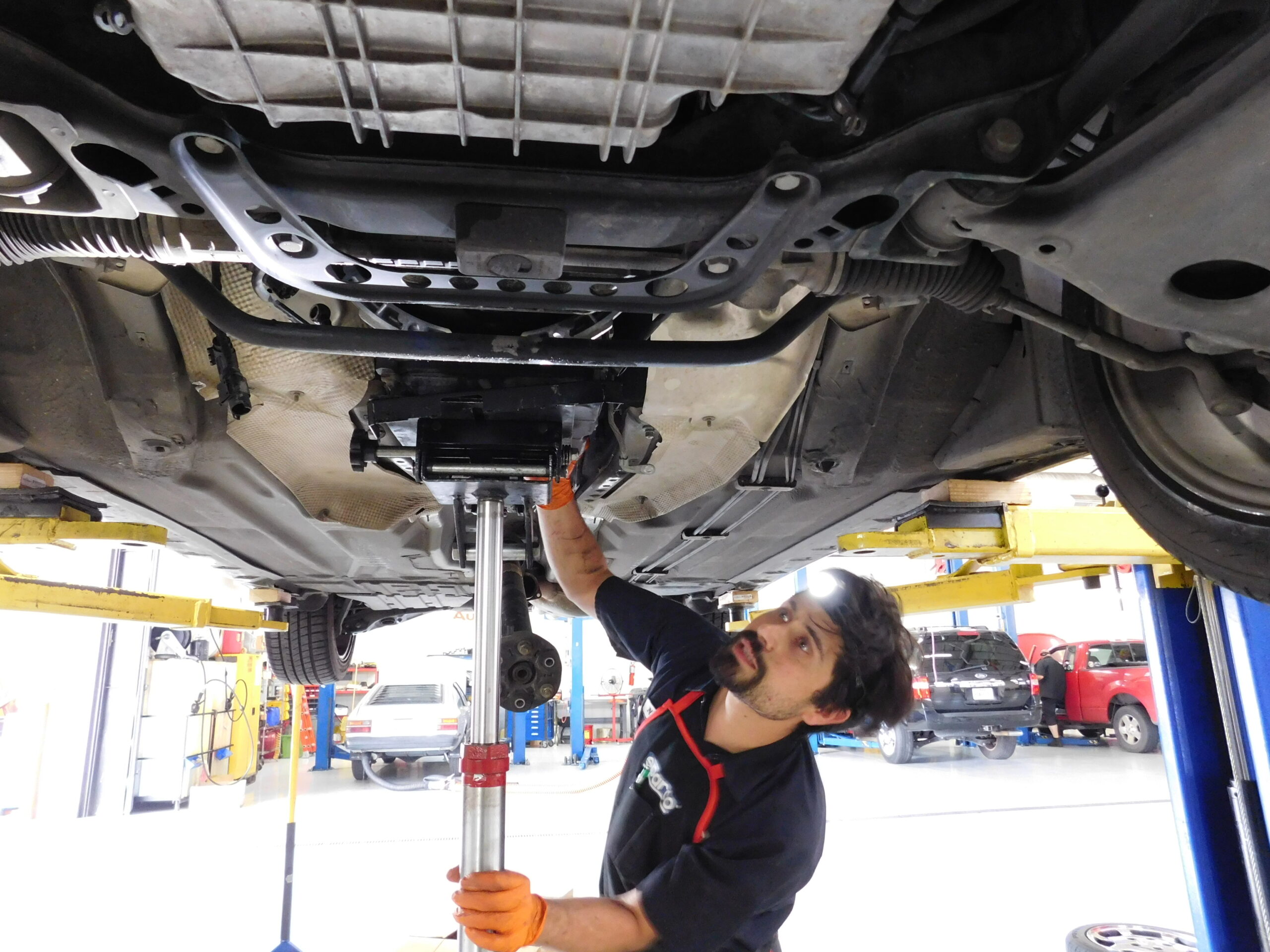
Slow drip, fluid still in normal range: You have a short window, a few days, to schedule an inspection. Top off with the correct fluid type and monitor the level closely.
Active leak with low fluid: Minimize driving immediately and get to a shop the same day. Running an automatic on low fluid generates heat that accelerates wear on the clutch packs and planetary gears, and those are expensive to replace.
Puddle under a parked car: Check the fluid level before starting the engine. If it’s significantly low, don’t drive the vehicle until it’s been inspected. A tow is far cheaper than a rebuilt transmission.
| Leak Severity | Fluid Level | Recommended Actions |
|---|---|---|
| Slow drip, intermittent | Within normal range | Top off; schedule inspection within a few days |
| Active drip while parked | Low | Limit driving; same-day inspection |
| Puddle under parked car | Significantly low | Don’t Drive; inspect before starting |
| Active leak while driving | Critically low | Stop driving; have vehicle towed |
Automatic transmissions have no tolerance for low fluid. They rely entirely on hydraulic pressure to shift, and that pressure dropsfast when fluid levels fall.
What a Transmission Fluid Leak When Parked Tells You
When a vehicle is parked and the engine is off, transmission fluid settles back into the pan. If a gasket or seal is compromised, fluid finds its way out at rest, sometimes more visibly than while driving, when heat and airflow can disperse small drips along the undercarriage.
A leak that appears primarily when the car is parked usually points to a static seal failure: most often the pan gasket, a rear output shaft seal or a loose cooler line fitting. The fact that you’re noticing it at rest generally means the leak is slow rather than severe, since a serious leak would show up while driving too.
That said, the fluid level is still dropping each time you park the car. Check it each morning before starting the engine. If it’s falling noticeably between checks, the vehicle needs to stay parked until it’s been inspected. If the level is holding, you have a few days to schedule a repair.
A note on driveway stains: A stain in a regular parking spot without a current wet puddle means the leak may be slow or intermittent. It’s still evidence the vehicle has been leaking, and worth having checked.
What Happens If You Ignore a Transmission Leak?
At low fluid levels, the transmission runs hotter than it was built to. Heat breaks down fluid viscosity, accelerates clutch pack wear and stresses the valve body that controls shift timing. The failure sequence is usually gradual: slipping gears, then rough shifts, then no engagement at all. By the time the transmission stops moving the car, the internal damage is often extensive.
Ignoring a leak will cause low levels of transmission fluid, which could lead to overheating, slipping gears, or total transmission failure.
A pan gasket replacement costs a fraction of a rebuild. A seal replacement costs far less than a new transmission. For European vehicles, transmission replacement can run $5,000 or more in parts and labor.
The failure timeline isn’t predictable. A transmission can run low for weeks with only minor symptoms, or fail suddenly at highway speed. At Fifth Gear, the vehicles that come in with a puddle are almost always a straightforward repair. The ones that come in with a burnt smell and a transmission that won’t engage are a different conversation.
Have Your Transmission Leak Inspected at Fifth Gear Automotive
If you’ve noticed fluid pooling under your car, or your vehicle is showing any of the symptoms above, get it inspected, not just topped off.
Our ASE-certified technicians will find the source of the leak, walk you through what they found using photos from your Digital Vehicle Inspection, and give you a clear picture of your repair options before any work begins. All repairs are backed by our 3-year, 36,000-mile warranty on parts and labor.
Fifth Gear Automotive serves drivers across Allen, Argyle, Aubrey – Crossroads, Castle Hills, Frisco, Lewisville, McKinney, North Fort Worth and Southlake, TX. Schedule a service appointment online or call your nearest location.
Frequently Asked Questions
What are the most common causes of a transmission fluid leak?
The most common causes are a worn pan gasket, failed input or output shaft seals, cracked or loose cooler lines, road debris damage to the transmission pan or a leaking torque converter seal. Each requires a different repair approach, which is why a proper inspection is the right first step rather than a fluid top-off.
How long can I drive with a transmission fluid leak?
It depends on severity. A slow drip with the fluid still in range gives you a few days to schedule service. An active leak with low fluid means limit driving and get it inspected today. A significant puddle under a parked car means check the level before starting the engine, and don't drive it if the level is substantially low. Automatic transmissions rely entirely on hydraulic pressure to shift gears, and when fluid levels drop, that pressure follows.
What does a transmission fluid leak when parked mean?
A leak that appears when the car is sitting usually points to a static seal failure: most often the pan gasket, a rear output shaft seal or a cooler line fitting. Fluid settles in the pan when the engine is off, and a compromised seal lets it escape at rest. The leak is usually slower than one visible while driving, but the fluid level is still dropping each time you park. Get it inspected promptly.
Can I drive with a leaking transmission?
Briefly, if the fluid level is still adequate and the leak is very slow. That window is narrow and hard to judge without a proper inspection. Automatic transmissions rely on hydraulic pressure to shift, and low fluid generates heat fast. That heat accelerates internal wear in ways that don't show up until the damage is done. Get it inspected before driving any further than necessary.
Methodology This post reflects the professional experience of Fifth Gear Automotive’s ASE-certified technicians working with automatic and manual transmission systems across European, domestic and import vehicles throughout the Dallas/Fort Worth area. Cost ranges are general estimates based on typical independent repair shop pricing and will vary by vehicle make, model and specific failure point.
Sources & Further Reading
- Automatic Transmission Rebuilders Association (ATRA): industry organization for transmission service standards and technical training
- Car Care Council — Automatic Transmission Service Guide: consumer education on transmission maintenance and service intervals
- Fifth Gear Automotive — Transmission Service and Repair
- Fifth Gear Automotive — Schedule Service
Last updated: August 17, 2026

Juan is a marketing enthusiast with over three years of experience in automotive marketing and serves as the Marketing Lead at Fifth Gear Automotive Repair. A University of North Texas graduate with a Master’s in Marketing, he works closely with expert technicians to share trusted insights and practical advice, helping drivers better understand and care for their vehicles.