By: Juan Garcia, Marketing Lead • Published: November 23, 2022 • Updated: June 8, 2026 • Read Time: 4 min
TL;DR
A car heater blowing cold air usually comes down to one of four things: low coolant, a heater core problem, a stuck thermostat, or a water leak. Any of these left unaddressed can escalate from an uncomfortable commute to an overheated engine.
Reason #1:LOW COOLANT LEVEL
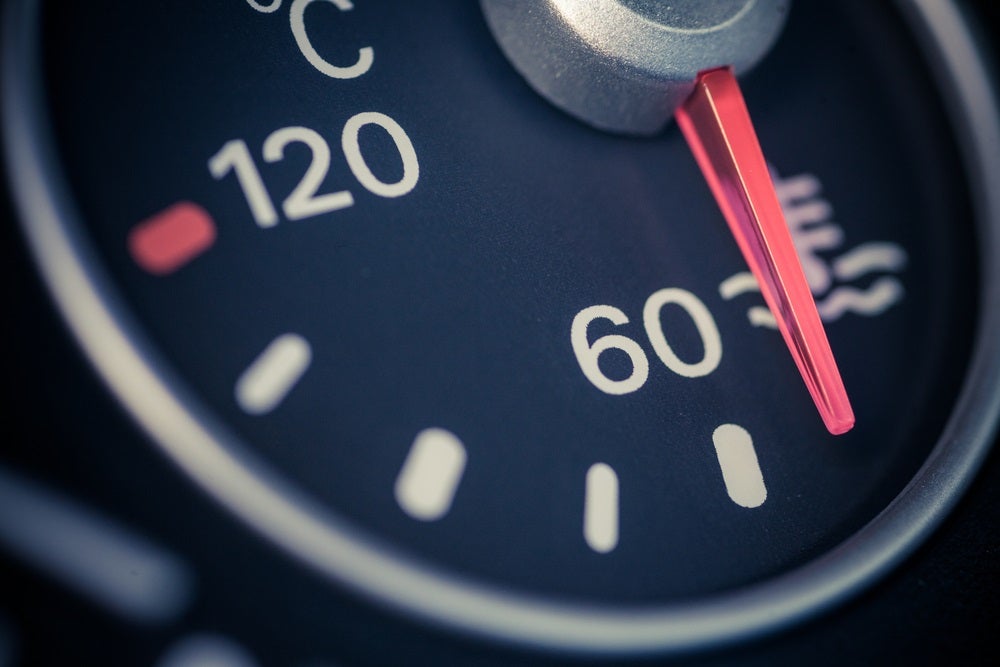
The coolant (usually a mixture of water and antifreeze) in your engine doesn’t just work to keep the engine from overheating: It’s also the source of heat supporting the heating system. If there isn’t enough coolant in your system, the heater core will blow cold air into your car.
Solution: If you confirm that a low coolant level is the source of your problem, you simply need to top off your coolant. You may want to check for leaks as well if you just recently refilled your coolant.
“Having no heat from the vents is a sign of low coolant due to the air pocket that forms inside the core itself. Once there is a leak, the air will travel to the highest area which usually is the heater core causing a no heat condition.” – Matt Tews, Technician, Fifth Gear Automotive Repair
Reason #2: Problems with Heater Core
Car heater problems are also frequently associated with heater core difficulties: coolant may not be traveling through the heater core properly, the air from the blower motor is not reaching it or there’s a clog in the small tubing of the heater core.
Heater cores, in a nutshell, are cooling system parts that resemble compact radiators. A heater core is made up of brass or aluminum tubing that carries the hot coolant in and out, along with fans that disperse the heat released by the coolant. A heater core is responsible for a vehicle’s defrosting and heating actions. Heater cores are typically situated directly in the back of dashboards.
If your car is not blowing warm air into the cabin and the coolant level is fine, then you could have an issue with your heater core. If you suspect that something is amiss with your car’s heater core, watch for these signs:
- Fog inside of your car
- A fruity, sweet-smelling odor
- Your car using coolant very quickly
- The engine overheating
Reason #3: Stuck Thermostat
All vehicles have a thermostat gauge located on the dashboard. After your vehicle has had time to warm up, your thermostat should move from “C” to “H”, to signify the temperature of your engine. The coolant will not circulate to the heater until the engine has reached a certain temperature.
If the thermostat is broken, the vehicle will not know the engine is warm, so the coolant will not be circulated to the heater core, which means the air will remain cold.
Reason #4: Water Leak
A water leak can cause your vehicle to blow cool air, or worse, cause permanent damage.
Leaking water can surface from many different parts, including radiator, water pump, split hose, or head gasket. The easiest way to find a leak is by checking under the hood. These leaks can stem from the tiniest of holes, so come by Trick Trucks if you need any help on your leak investigation. Our skilled technicians have years of experience and a trained eye to spot any and all leaks.
What Happens When You Ignore Heater Problems?
You shouldn’t think that a defective heater not warming you up in your vehicle will only result in you being a lot colder on your next drive. If the reason the heater isn’t working is something like the blower fan fuse, motor, or wiring, then it’s not as mechanically serious, and you’ll just be cold. However, if there’s a blockage in the cooling system, trapped air, or a coolant leak, then you could be staring down the cylinders of an engine ready to overheat.
Even if catastrophic engine failure isn’t imminent, other safety hazards are. A heater not working means your defrosters are not working and you can’t get warm air circulating into the cabin to stop the windows from fogging, which has obvious safety implications for driver visibility. Getting that heater repaired should be your top priority.
Preventative Maintenance Is the Answer
The best medicine for your heater woes is to stop them from happening in the first place. Have your car’s cooling system maintained through regular servicing. Do you know when your radiator, heater core, belts, hoses, and coolant were last checked and signed off by a technician? If not, then it’s time to do it now. The time to reach out to Fifth Gear Automotive Repair is now!
Save yourself the trouble and schedule an appointment with us right here: CLICK HERE TO SCHEDULE MY SERVICE!
Frequently Asked Questions
Can I still drive my car if the heater isn’t working?
It depends on the cause. If it’s a blown fuse or a failed blower motor, you’ll simply be cold. But if the problem is a coolant leak, a blockage in the cooling system, or trapped air, continuing to drive risks engine overheating and serious mechanical damage. A non-working heater also means non-working defrosters, which is a safety hazard.
What are the signs of a failing heater core?
Watch for fog forming inside the cabin, a sweet or fruity smell (that’s coolant), your car consuming coolant unusually fast, or your engine temperature creeping higher than normal. Any of these alongside cold air from the vents points to a heater core issue.
How does a stuck thermostat cause the heater to blow cold?
Your thermostat regulates when coolant circulates from the engine to the rest of the cooling system. If it’s stuck or not reading engine temperature correctly, the coolant never reaches the heater core — so the blower pushes cold air into the cabin even after the engine has been running for several minutes.
How can I prevent heater problems from happening?
Regular cooling system maintenance is the best preventative. Have your radiator, heater core, belts, hoses, and coolant inspected on a routine service schedule. Catching low coolant or a small hose leak early is far less expensive than diagnosing a failed heater core or an overheated engine.
METHODOLOGY
This post reflects Juan Garcia’s professional experience in automotive marketing, developed in collaboration with Fifth Gear’s ASE-certified technicians. Causes and symptoms described are based on common real-world diagnostic patterns observed across Fifth Gear Automotive Repair locations and are consistent with manufacturer cooling system guidance. No original survey research was conducted for this post.
SOURCES & FURTHER READING
- Fifth Gear Automotive Repair: Schedule Service
- Fifth Gear Automotive Repair Blog
- Low Coolant Light On? Causes, Risk, and Quick Fixes
Last Update: June 8, 2026

Juan is a marketing enthusiast with over three years of experience in automotive marketing and serves as the Marketing Lead at Fifth Gear Automotive Repair. A University of North Texas graduate with a Master’s in Marketing, he works closely with expert technicians to share trusted insights and practical advice, helping drivers better understand and care for their vehicles.