By John Miller, Director of Business Development • Published April 30, 2015 • Updated July 27, 2026 • Read Time 5 min
TL;DR
A worn serpentine belt shows up as squealing at startup, visible cracking or glazing, and sluggish accessory performance. Replace it at manufacturer-recommended intervals (typically 60,000-100,000 miles) before a break causes cascading engine damage.
What the Serpentine Belt Actually Does
The serpentine belt is a single continuous belt that winds through your engine bay, driving multiple systems at once: the alternator, power steering pump, air conditioning compressor, and water pump, depending on your vehicle’s configuration. Older vehicles used separate belts for each accessory; modern cars consolidate this into one belt, which is why a failure affects so many things at once.
When the serpentine belt is working correctly, you probably never think about it. When it starts to fail, you notice fast: the battery warning light comes on because the alternator stops charging, steering becomes heavy, the A/C stops cooling, or the engine starts running hot. These are not separate problems. They are symptoms of one failing component.
Understanding what the belt drives is the first step to understanding why replacing it proactively is almost always less expensive than waiting for it to fail.
Warning Signs Your Serpentine Belt Is Wearing Out
As belts age, they can wear out and become stretched past the point of maintaining optimal tension. When this happens, you might experience a squealing or screeching noise at start-up or intermittently as you drive.
Beyond noise, there are visual signs worth knowing:
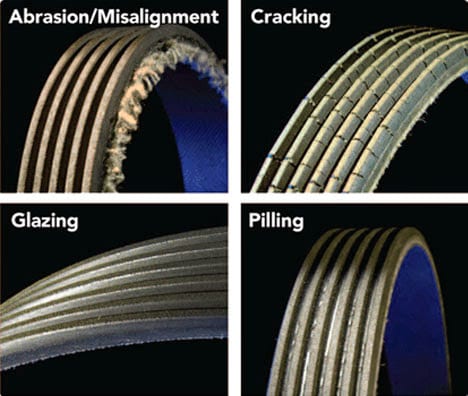
- Cracking or fraying — Small cracks across the ribbed side of the belt are the most common sign of age-related wear. A belt with multiple cracks running across its width is approaching failure.
- Glazing — A shiny, hardened appearance on the flat side of the belt indicates heat buildup and slipping. A glazed belt loses grip on the pulleys, which produces that characteristic squeal and causes the accessories it drives to underperform.
- Missing chunks or worn ribbing — If the belt’s ribs are worn flat or sections are missing entirely, it is overdue for replacement.
- Visible misalignment — A belt tracking unevenly on a pulley indicates an alignment or tensioner issue that will accelerate wear regardless of the belt’s age.
“The number one thing we see at inspection is glazing. You look at the ribbed side of the belt and instead of a dull black rubber, it looks shiney, almost like its been polished. The shine means the belt has been slipping and cooking itself on the pulleys. If you run your fingers across the ribs and it feels slick and hard instead of grippy, its done!” – Matt Tews, ASE-Certified Technician, Fifth Gear Automotive Repair
How Long Does a Serpentine Belt Last?
Most modern serpentine belts are engineered to last between 60,000 and 100,000 miles, though this varies by manufacturer, belt material, and driving conditions. European vehicles in particular often have tighter replacement intervals specified in the maintenance schedule.
If your car has reached the mileage at which the manufacturer recommends changing your serpentine belt, it is a good idea to have that done.
Heat, oil contamination, and misaligned pulleys can shorten a belt’s lifespan considerably below the manufacturer’s estimate. Driving in North Texas summers adds stress to rubber components that drivers in cooler climates don’t face at the same rate. If you are not sure when your belt was last replaced, that uncertainty is itself a reason to have it inspected.
| Belt Condition | Typical Mileage Range | Recommended Action |
|---|---|---|
| New / like new | 0–40,000 miles | Monitor at routine service |
| Minor surface cracking | 40,000–70,000 miles | Inspect closely at each service interval |
| Visible cracking or glazing | 70,000–100,000 miles | Replace promptly |
| Fraying, missing ribbing, or chunks | Any mileage | Replace immediately |
What Happens If the Belt Breaks While You’re Driving
If left unchecked, the belt will eventually break or come off while you’re driving, which can cause a lot more damage.
That “lot more damage” is worth unpacking. If the serpentine belt drives your water pump, a belt failure means your engine loses coolant circulation almost immediately. Within a few minutes at highway speed, an overheating engine can warp a cylinder head, blow a head gasket, or seize entirely. A repair that would have cost a few hundred dollars becomes a repair measured in thousands.
Even if your vehicle’s water pump is driven by the timing belt rather than the serpentine belt (common on some European models), a broken serpentine belt still kills the alternator and power steering instantly. Losing power steering at highway speed, or watching the battery light come on mid-commute, is both dangerous and inconvenient in ways that a scheduled belt replacement simply isn’t.
“Just last month we had a 2007 Chevy Impalta towed in after the serpentine belt let go while the customer was driving. The belt drives the alternator so once it went, the battery drained and the car died. The customer couldn’t even limp it home. And it’s rarely just the belt at that point. We have to check the pulleys and tensioners for damage. A repair like this one can run you around $1000 or more depending on damage.” — Matt Tews, ASE-Certified Technician, Fifth Gear Automotive Repair
Schedule a Serpentine Belt Inspection at Fifth Gear Automotive Repair
Bring your vehicle in today to have one of our certified technicians examine your belt for signs of wear or damage.
At Fifth Gear Automotive Repair, a serpentine belt inspection is included in our standard multi-point vehicle inspection. If your belt shows signs of cracking, glazing, or wear, we’ll show you what we found and walk you through the recommended service before any work begins. We use quality replacement parts and back our repairs with a 3 year/ 36,000 miles warranty.
Fifth Gear Automotive Repair serves drivers across Allen, Argyle, Aubrey – Crossroads, Castle Hills, Frisco, Lewisville, McKinney, North Fort Worth, and Southlake, TX. Schedule a service appointment online or call your nearest location.
Frequently Asked Questions
What does a worn serpentine belt look like?
A worn serpentine belt typically shows small cracks across its ribbed surface, a shiny or hardened appearance (glazing) on the flat side, or visible fraying along the edges. If the ribs are worn flat or chunks are missing, the belt is past due for replacement.
Can I drive with a bad serpentine belt?
It is not advisable. If the belt is already cracking or slipping, it can fail without warning. A broken belt immediately disables the alternator and power steering, and if your water pump is serpentine-belt-driven, your engine can overheat rapidly and sustain serious internal damage within minutes.
What is serpentine belt glazing?
Glazing is a hardened, shiny condition that develops on the flat side of a serpentine belt when the belt slips on a pulley and generates excess heat. A glazed belt loses grip on the pulleys, causing accessories to underperform and producing a persistent squealing noise. Glazing often points to an underlying tensioner or pulley alignment issue as well.
How much does serpentine belt replacement cost?
Serpentine belt replacement is generally one of the more affordable maintenance services. Parts typically range from $25 to $80 depending on the vehicle; labor adds to that, but the total is usually well under $200. Compared to repairing an overheated engine or a seized accessory, it is a minor investment.
Methodology This post reflects the professional experience of Fifth Gear Automotive’s ASE-certified technicians working with European and domestic vehicles across the Dallas/Fort Worth metroplex. Belt wear patterns and replacement intervals referenced are consistent with manufacturer service documentation and ASE-standard inspection criteria.
Sources & Further Reading
- Gates Corporation — Belt Wear Patterns Reference — industry-standard resource for belt wear identification used by professional technicians
- Car Care Council — Belts and Hoses Maintenance Guide — consumer-facing maintenance education
- Fifth Gear Automotive Repair — Services
- Fifth Gear Automotive Repair — Schedule Service
Last updated: July 27, 2026

John Miller is the Director of Business Development at Fifth Gear Automotive.
Fifth Gear Automotive Repair provides automotive service and repair. We service all makes and models – both domestic and import. We specialize in European auto repair for BMW, VW, Mercedes, Porsche, Audi, Volvo, Jaguar, Land Rover and most other popular European marques.
Fifth Gear Automotive has 10 locations – Allen, Argyle, Aubrey-Crossroads, Castle Hills, Frisco, Lewisville, McKinney, North Fort Worth, and Southlake, Texas.